Welcome to our FAQ series! One of our most commonly asked questions and first on the agenda – which worktop material should I be using? When choosing solid worktop surfaces, bakery and coffee shop owners are often presented with a wide variety of materials. Solid surface worktops like Staron, Corian or Hi-Macs are popular for their seamless appearance and durability, but how do they compare to alternatives like laminate, quartz and stainless steel?
We work with a huge range of worktop surface materials, each with their own unique pros and cons, but quite often there are multiple options which come down to a preference on look and cost. Here’s a breakdown of the key differences between these materials.
Examples of Solid Surface Worktops (Staron, Corian, Hi-Macs etc.)
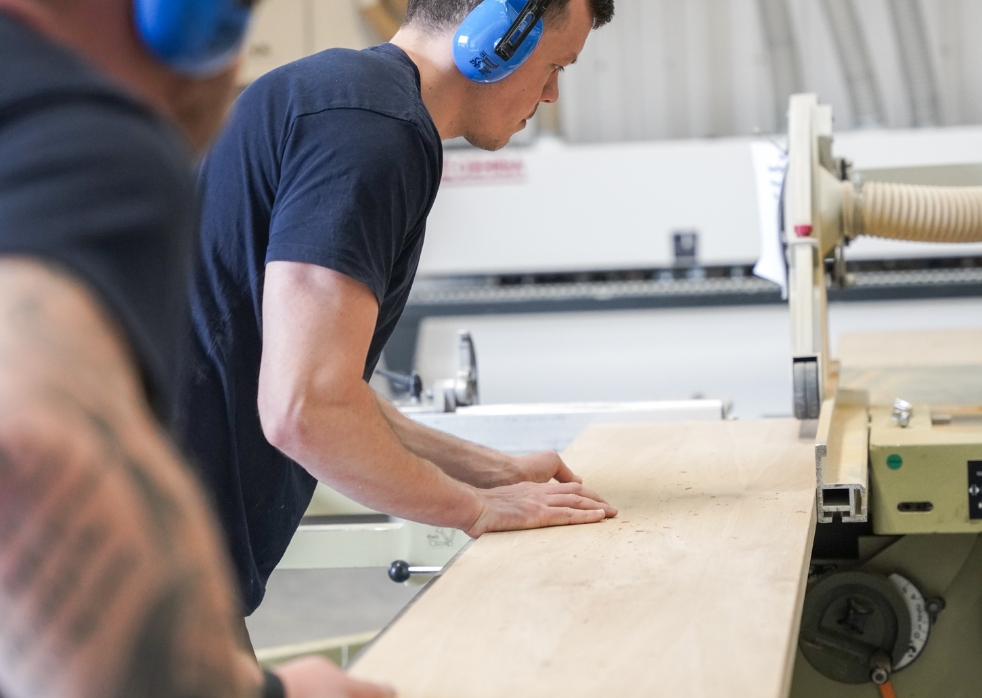
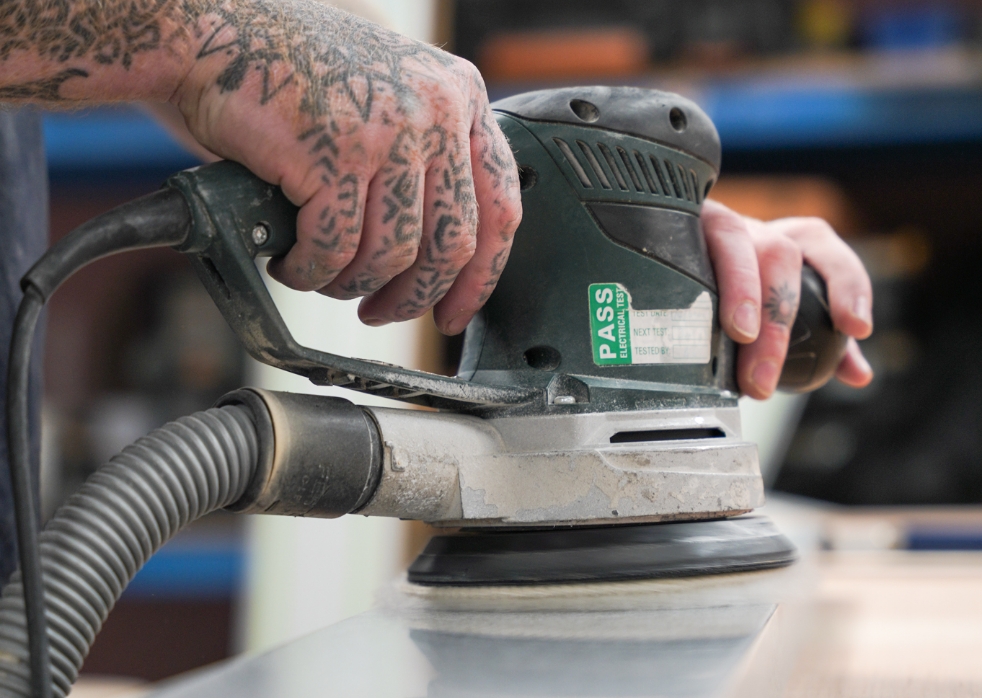
Solid worktop surfaces are synthetic materials made from acrylic, resin and natural minerals. These worktops offer seamless joints, making them ideal for creating a uniform, modern look in your worktop surface. Scratches and stains can be sanded out, making them easy to repair further down the line, offering an easily cleanable, hygienic surface. Each different brand comes in a wide range of colours and patterns mimicking natural stone, marble or solid block colour.
Solid surface offers a level of performance in terms of heat resistance, tolerating moderate temperatures up to 100oc but may be damaged by direct contact with hot trays and pots. It’s our preferred choice for the bakery industry – being somewhere between the lower end costs of laminate and higher end costing of quart and granite dependent upon finish and brand.