
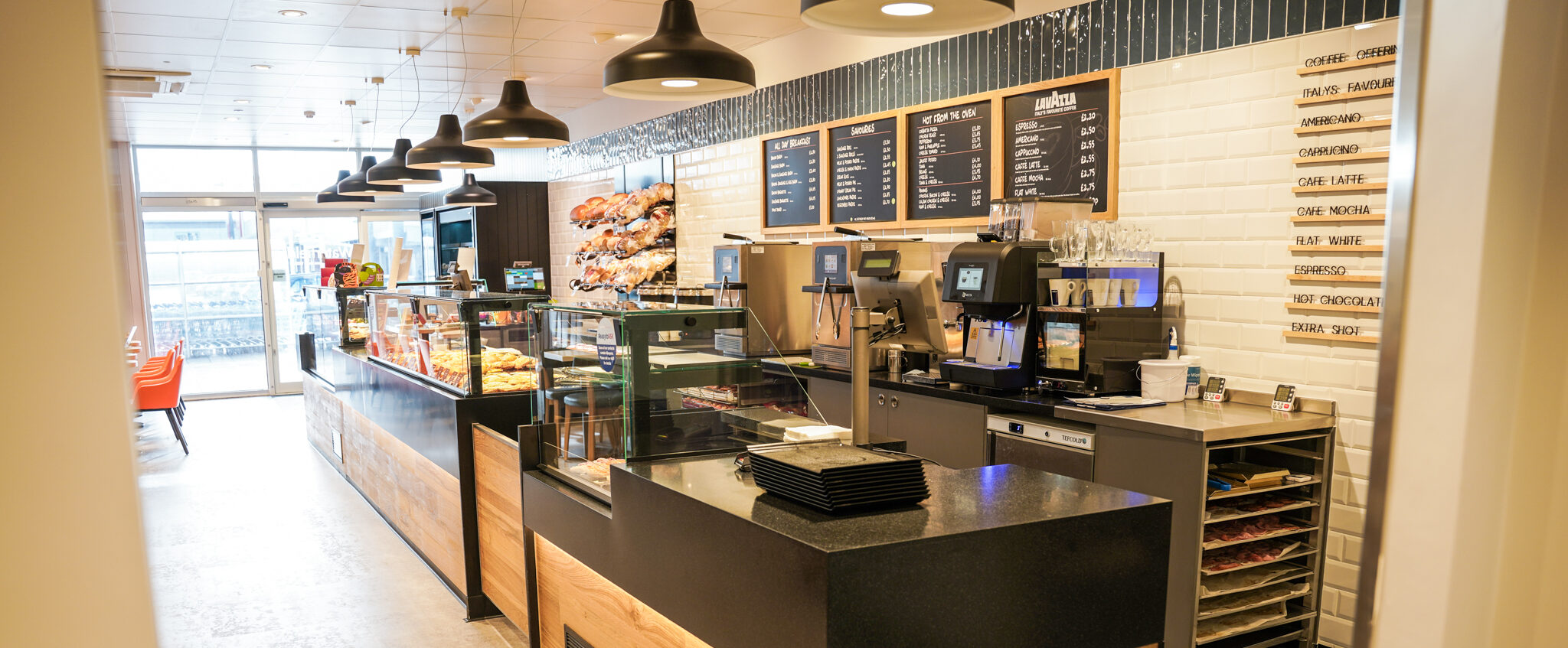
The different types of coffee machines
Popular coffee machines include an espresso machine, an automatic espresso machine, or a bean-to-cup system. Each has its own benefits, depending on the kind of experience you want to offer and the quality your customers expect.
Traditional espresso machines
These machines are preferred for speciality coffee shops as they allow baristas to control every step and create a more personal experience, but they increase the need for training and can be slower when it’s busy.
Automatic espresso machines
For busy cafés or bakeries that want both quality and speed, these are often a good choice, as they combine traditional skills with automation to speed up the process. The drinks produced are more consistent and often produce better coffee than a fully automated machine.
Bean-to-cup machines
Where speed and consistency matter most, these machines are highly automated, handle almost every step of the process, and make training and daily operations easier.
Quality vs speed: What’s more important?
If you run a speciality coffee shop where customers care about craft coffee and want to offer a more premium experience, a traditional espresso machine might be the preferred choice, and support a higher price point.
In cafés and bakeries where customers tend to grab coffee on the go, automated machines keep service fast and consistent, taking pressure off staff.
Long lines affect customer satisfaction, so the choice should depend on what your customers expect.
Comparing coffee machine options
| Feature | Traditional espresso | Automatic espresso | Bean-to-cup |
|---|---|---|---|
| Coffee Quality | Excellent | Very good | Good |
| Service Speed | Moderate | Fast | Very fast |
| Training Required | High | Medium | Low |
| Consistency | Variable | High | Very high |
| Customer Experience | Premium | Professional | Functional |
| Best Suited To | Speciality coffee shops | Busy cafés/bakeries | High-volume spaces |
Buying or leasing: Which makes sense?
Deciding whether to buy or lease your equipment is also important, but the best option depends on your finances and growth plans. Buying gives you full ownership and can save you money in the long run, but it comes with a greater upfront cost. For new businesses, this can be tough when you’re already spending on setup, staff, and supplies.
Leasing is popular because it lets owners spread out the cost over time, which can make better equipment more affordable and helps keep more cash available when you’re just starting out. Many leases also include service and maintenance, so you can avoid surprise repair bills. The downside is that leasing usually costs more overall than buying.
Planning your coffee shop around your machines
People often forget how much a coffee machine affects the design of the surrounding space. Commercial machines require sufficient power, water, drainage, and ventilation, whereas larger machines can also affect how your counter is set up and what customers can see.
Planning ahead helps your staff work more smoothly, keeps service efficient, and makes sure your space works as well as it looks.
Speak to Frimovel
Frimovel specialises in custom bakery, café and coffee shop fit-out, designing spaces that work for your staff and customers.
Contact Frimovel to talk about your project, and we can help you add value to your business for years to come.
FAQs
What type of coffee machine do most coffee shops use?
Many independent coffee shops use traditional espresso machines because they offer more control over drink quality and support a premium customer experience.
Is a bean-to-cup machine suitable for a coffee shop?
Bean-to-cup machines can work well in cafés that prioritise speed, consistency and ease of operation, particularly where staffing resources are limited.
Is it better to buy or lease a commercial coffee machine?
Buying may reduce long-term costs, while leasing can improve cash flow and reduce the initial financial commitment.
How much space does a commercial coffee machine require?
Requirements vary depending on the machine, but operators should also allow space for grinders, milk preparation, cleaning access and day-to-day workflow.
When should coffee equipment be considered during a fit-out?
Equipment selection should ideally take place during the early design stages so that utilities, counter layouts and workflows can be planned effectively around it.
